Formation and catechesis • Completed
Guadalupan Congress Deepens Understanding of the Message and Mission of Our Lady of Guadalupe
Scripture, Tepeyac, and the Tilma in preparation for the Guadalupe Philippine Pilgrimage
- Date
- Speakers
- Bro. Vincent Domaicos and Bro. Emmanuel Carpio
- Venue
- Diocesan Shrine and Parish of Our Lady of Guadalupe
As the community continued its spiritual preparation for the Guadalupe Philippine Pilgrimage 2026, devotees, parish workers, and pilgrims gathered on September 13 for the Guadalupan Congress— an afternoon dedicated to discovering more deeply the story, image, message, and continuing mission of Our Lady of Guadalupe.
Held at the Diocesan Shrine and Parish of Our Lady of Guadalupe in Pagsanjan, the Congress formed part of the parish's nine-week preparation for the arrival of the pilgrim images of Our Lady of Guadalupe and San Juan Diego on September 22–24.
Two talks invited participants to journey from the biblical foundations of Mary's mission, through the events at Tepeyac in 1531, and into the rich symbolism of the miraculous image preserved on the tilma of San Juan Diego.
From Scripture to Tepeyac
The first talk, given by Bro. Vincent Domaicos, explored the story of Guadalupe within the wider story of salvation. Beginning with the Protoevangelium—the first announcement of God's victory over evil in Genesis—the discussion reflected on how the image and mission of Mary have long been understood within this promise of salvation.
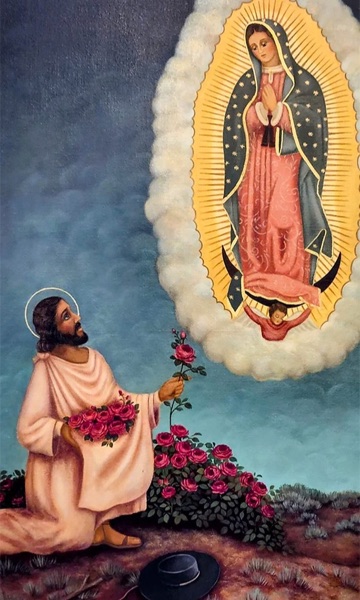
Participants were then brought into the historical world of the apparitions: Aztec religion and culture, the upheaval that followed the Spanish conquest of Mexico, and the suffering and uncertainty experienced by its people. It was in this wounded setting that the indigenous Saint Juan Diego encountered the Blessed Virgin Mary at Tepeyac in December 1531.
The apparitions were presented not simply as a sequence of extraordinary events, but as an encounter through which Mary came close to a people in pain. Through Juan Diego, she asked that a sacred place be built where she could manifest her love, compassion, help, and protection.
“Do whatever he tells you.”
The central message of Guadalupe
The talk connected Guadalupe with Mary's free response to God at the Annunciation, her bringing Christ to Elizabeth at the Visitation, her words at the Wedding at Cana, and Jesus' gift of his mother to the beloved disciple at the foot of the Cross. The woman and the defeat of evil in Revelation 12 also offered a way of contemplating the familiar signs in the Guadalupan image.
Seen together, these passages reveal that devotion to Our Lady of Guadalupe always points beyond Mary to Jesus Christ. Her message is not only about an image from the past. It is an invitation to encounter her Son.
Mary and the encounter of two worlds
The appearance of Our Lady as a mestiza and her encounter with the indigenous Juan Diego carried particular meaning in a society divided by conquest and culture. She did not appear as a distant queen belonging only to the conquerors. She came close, spoke with tenderness, and entrusted an ordinary person with a mission.
Guadalupe therefore reminds the Church that authentic evangelization is not simply about bringing a message to people. It also requires encounter, listening, respect, and accompaniment.
The Congress in three movements
Apparition, image, and living mission.
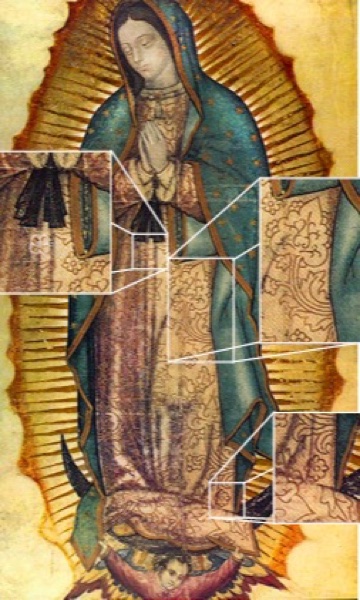
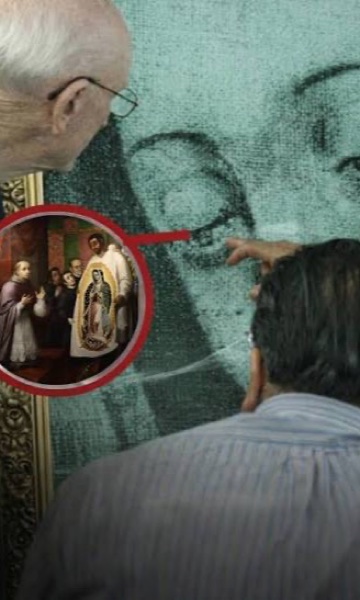
These devotional and teaching images illustrate the subjects explored during the Congress.
Guadalupan Mariology: reading the image
The second talk, given by Bro. Emmanuel Carpio, led participants deeper into Guadalupan Mariology. Beginning with a journey from Compostela to Tepeyac, the discussion placed Guadalupe within the longer history of Christianity and Marian devotion before arriving at Mexico in 1531.
Particular attention was given to the tilma and to various reported scientific investigations conducted through the years. Participants learned about the material traditionally identified as the tilma's fiber, its unusual preservation, and recognizable details such as Our Lady's eyes, bowed head, ribbon, womb, mantle of stars, and surrounding cosmic imagery.
An image that spoke to a people
For the indigenous people of sixteenth-century Mexico, these details were more than decoration. Mary's bowed head communicated humility: she herself is not God. The ribbon around her waist has traditionally been understood as a sign of pregnancy. The sun, moon, stars, and other elements spoke within a religious and cultural world familiar to those who first saw the image.
Together, the signs proclaimed something greater than the image itself: Mary comes bearing Jesus Christ. The tilma became not merely something to look at, but an image through which a people could begin to understand the Christian message.
What does Guadalupe mean for us today?
Nearly five centuries after Tepeyac, Mary's invitation remains relevant. She continues to lead people toward her Son and to remind the Church to draw close to those who are overlooked, wounded, uncertain, or searching. Through San Juan Diego, she also reminds ordinary people that God can entrust an extraordinary mission to anyone willing to listen and respond.
For the community of Pagsanjan, this takes on particular meaning as we prepare to welcome pilgrims from many places. Our preparation cannot end with schedules, decorations, logistics, and programs.
We are preparing a home.
We are preparing to welcome our brothers and sisters in faith.
We are preparing our hearts for a deeper encounter with Christ.
The Guadalupan Congress became another step in our pilgrimage even before the pilgrim images arrived. Perhaps the real pilgrimage does not begin when we start walking toward the Shrine. It begins when we allow the message of Guadalupe to enter our hearts—and, like San Juan Diego, become willing to carry that message to others.
From knowledge to pilgrimage
The pilgrimage begins in the heart.
Our Mother always leads us closer to her Son, Jesus.
¡Viva San Juan Diego! ¡Viva la Virgen de Guadalupe! ¡Viva Cristo Rey!Return to spiritual preparation